
Co-extruded films & rigid containers
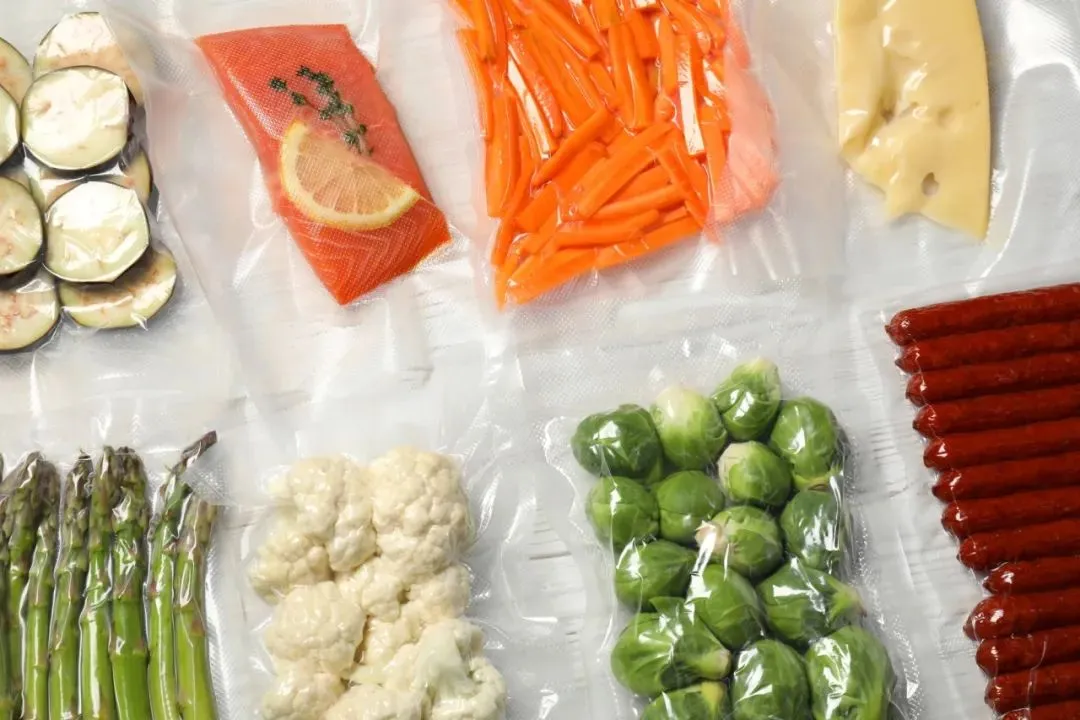
Food, pharmaceutical, and cosmetic packaging with high barrier integrity.
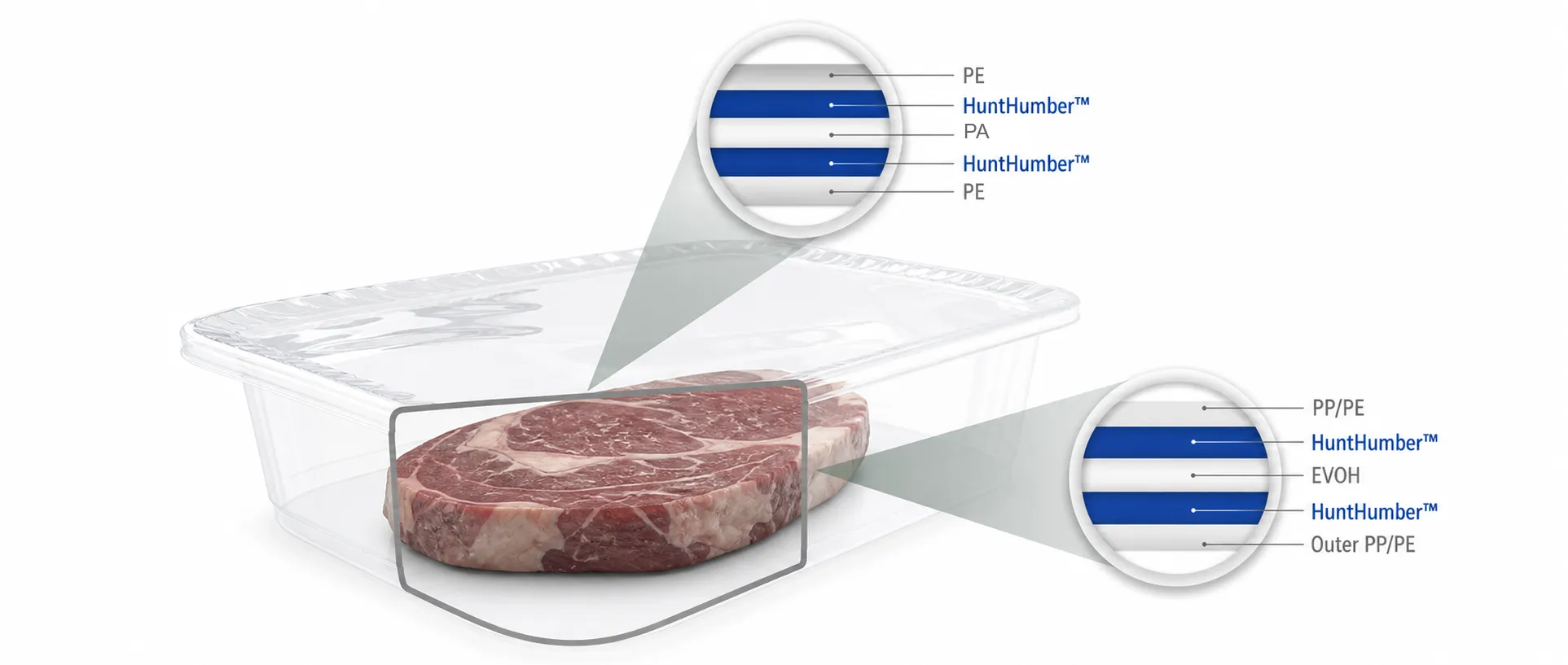
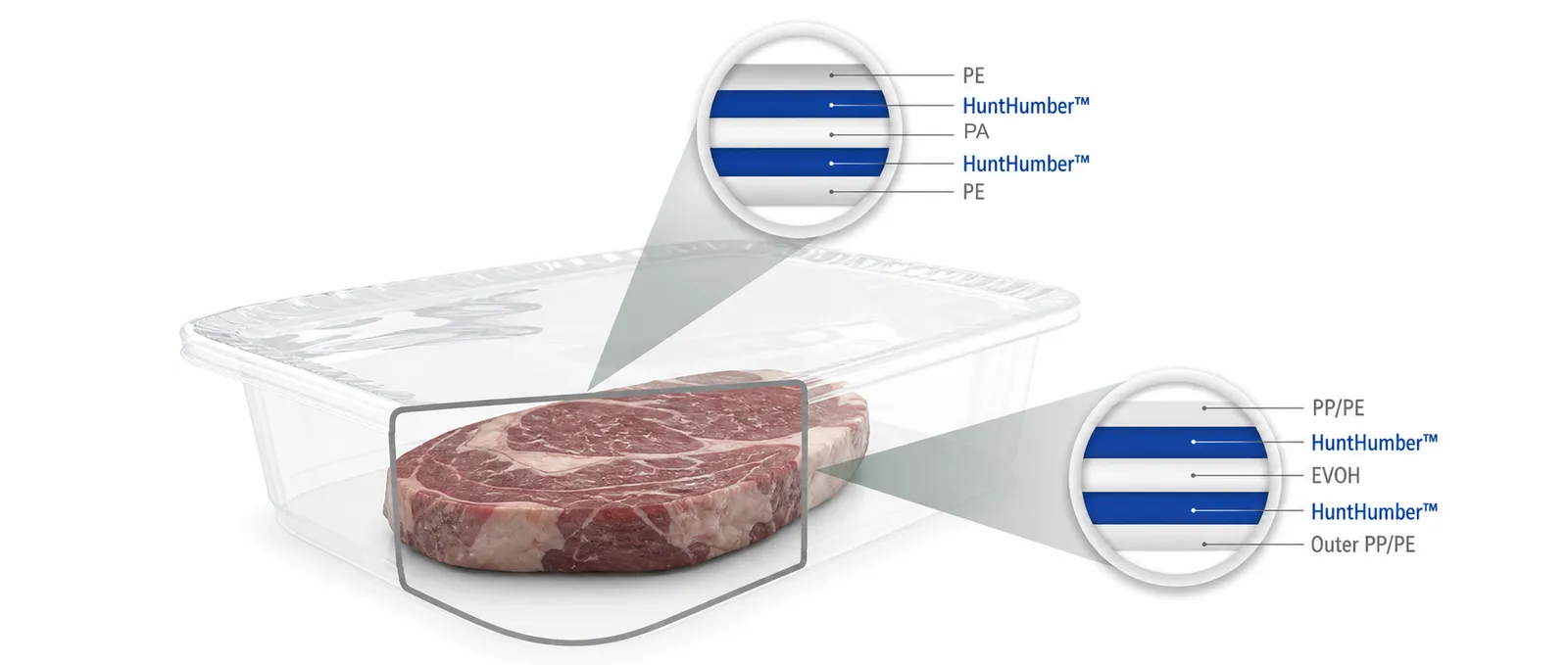
High-barrier structures fail when polar EVOH or PA layers delaminate from structural PE layers. HuntHumber AT and AD series tie resins provide controlled grafting density and clean rheology across 5- to 9-layer coextrusion lines.
AT series grades cover Low to High MAH content tailored for PA/PE and EVOH/PA/PE film structures, while AD318, AD428, and AD1816 offer balanced interfacial adhesion and optical clarity for EVOH-containing food packaging and rigid bottles.
AD318 extends tie-layer performance to multilayer PE-RT and PEX/EVOH oxygen-barrier pipe coextrusion, maintaining stable peel strength under hot-water thermal cycling.
Select lower MFR (1.7–2.0) for blown film bubble stability and heavy-duty thermoforming webs, or higher MFR (AT45C at 4.5 g/10 min) for high-output cast film lines.
Multilayer Applications
Tie layers enable dissimilar polar barrier layers (EVOH, PA) and non-polar polyolefin layers (PE, PP) to function as a single cohesive structure across food, pharmaceutical, and cosmetic packaging as well as hot-water oxygen-barrier composite pipes.
Food, pharmaceutical, and cosmetic packaging with high barrier integrity.
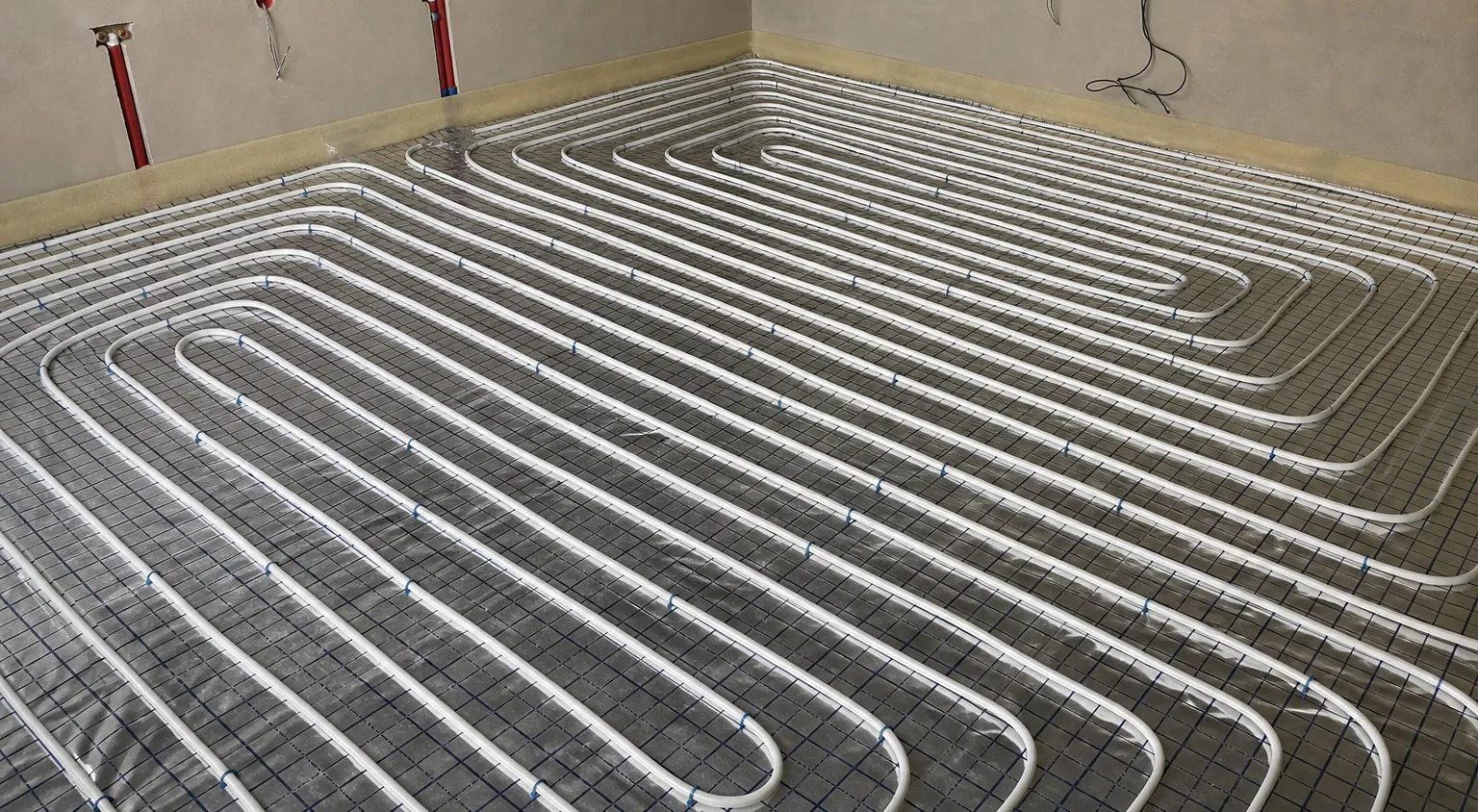
Sustained interfacial peel retention across PE-RT and PEX hot-water cycling.
A flat-film peel result describes the film. A tray or pouch also passes through forming and, in retort applications, heat treatment. Keep a flat-film control and compare it with the formed part at the same locations.
Record force per unit width, peel angle and the interface where separation occurred.
Keep the offcut as the control for the formed part.
Cut sections at the corner and the deepest draw. Measure the remaining barrier and tie thickness before peeling.
Thinning at a corner and separation along one interface need different fixes.
Repeat the peel on the treated part and note where it now separates.
A lower force with the same failure location is not the same result as a change of interface.
Acceptance limits follow the structure and the end use agreed with the converter. They are not fixed by this page.
| Grade | Base Resin | Density | MFR | Melting Point | Vicat / Tg | MAH Content | Bonds To / Targets | Processing / Use |
|---|---|---|---|---|---|---|---|---|
| AT3016 | LLDPE | 0.920 | 2.0 | 121 °C | 106 | Low | PA, PE | Blown film/Cast film |
| AT3018 | LLDPE | 0.920 | 1.8 | 121 °C | 106 | Medium | PA, PE | Blown film/Cast film |
| AT2718 | LLDPE | 0.918 | 2.7 | 115 °C | 103 | High | PA, PE | Blown film/Cast film |
| AT2018 | LLDPE | 0.920 | 1.7 | 121 °C | 106 | High | EVOH, PA, PE | Blown film |
| AT45C | LLDPE | 0.930 | 4.5 | 125 °C | 100 | Low | PA, PE | Blown film/Cast film |
| AD318 | LLDPE | 0.915 | 1.9 | 119 °C | 103 | Medium | EVOH, PA, PE | Blown/Cast film, PEX/EVOH oxygen-barrier pipe structure |
| AD428 | LLDPE | 0.910 | 1.7 | 119 °C | 103 | Medium | EVOH, PA, PE | Blown/Cast film |
| AD1816 | LLDPE | 0.924 | 2.2 | 121 °C | 100 | Low | EVOH, PA, PE | Blow molding / film |