
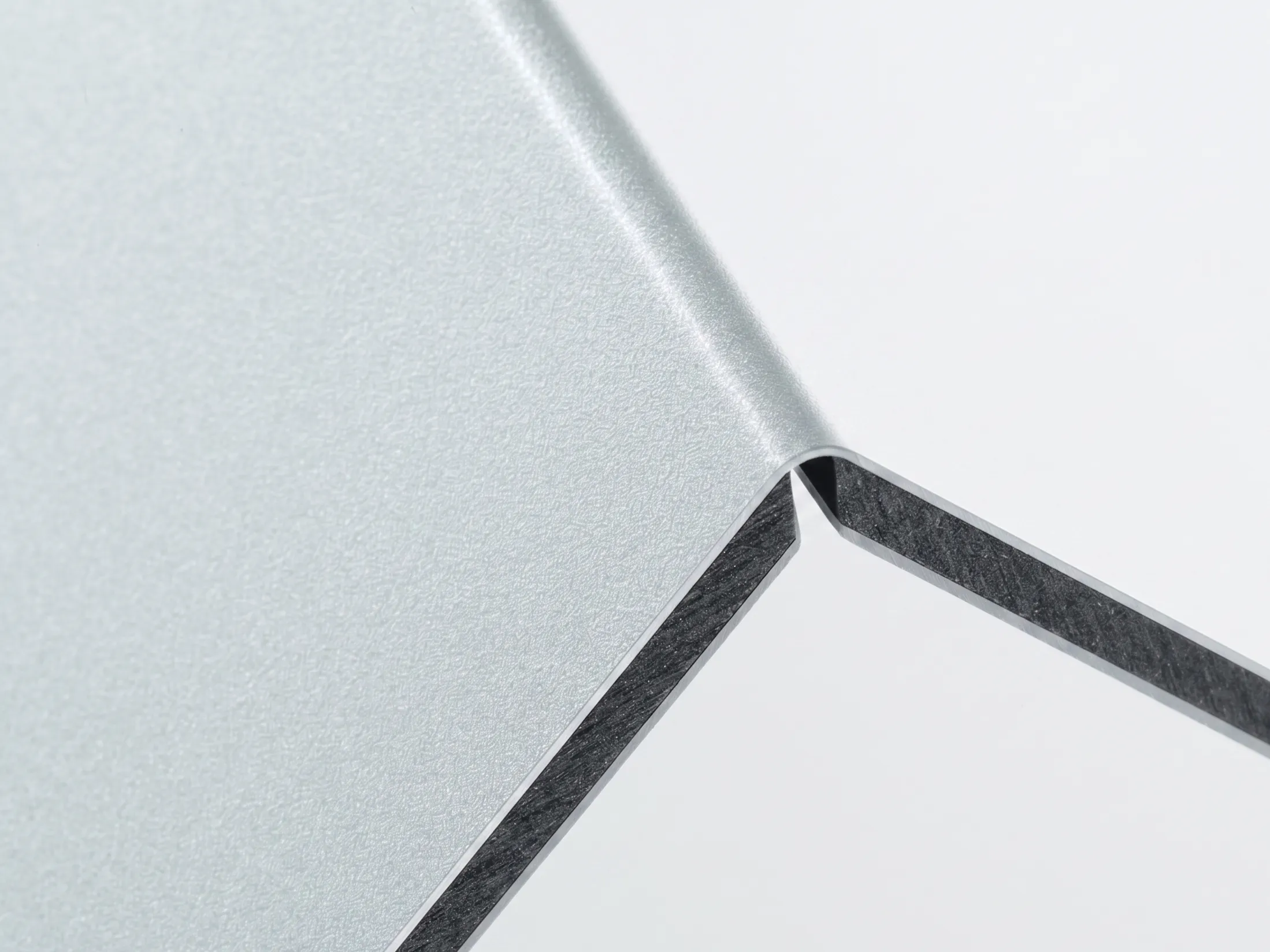
Architectural ACP facades
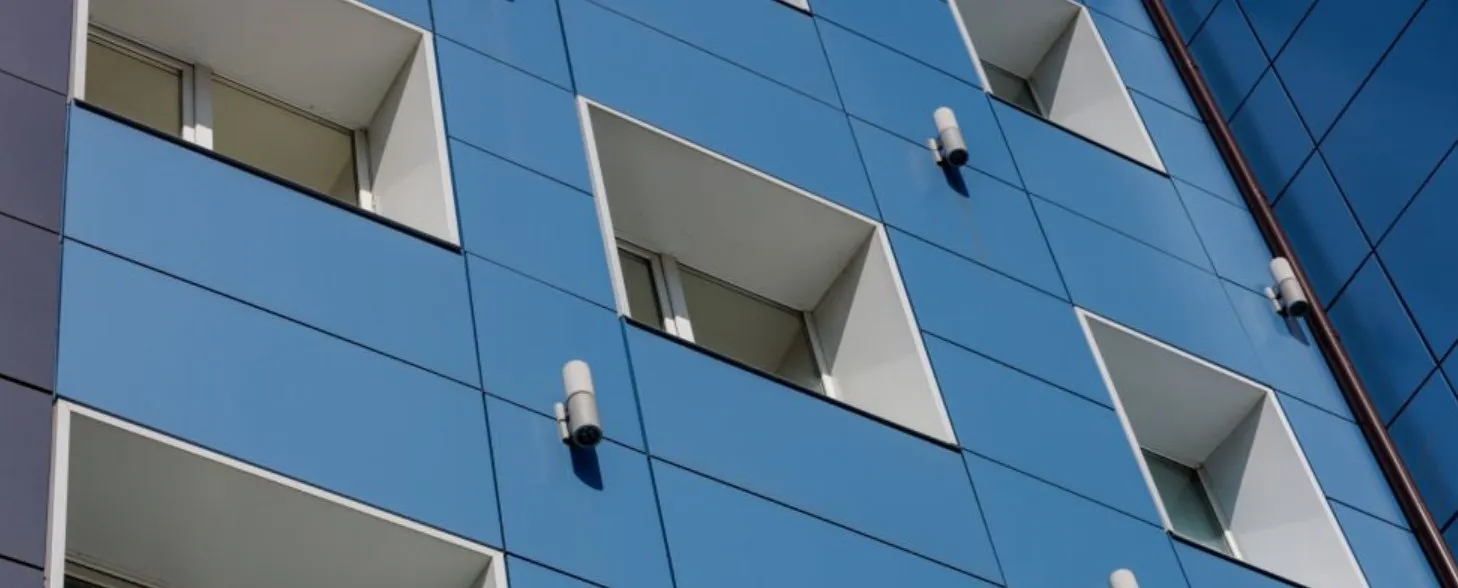
Exterior cladding, curtain walls, and folded cassette panels
HuntHumber panel bonding resins bridge polar metal skins and non-polar polyolefin cores under thermal lamination, blown film pre-lamination, and direct coextrusion coating.
EVA-based grades (JME30A, JME30C, JMV240, LHT808) soften between 72 °C and 82 °C Vicat for high line speed and smooth winding. PE-based grades (JMV260, JMV265, JMV300, JMV400) raise Vicat to 88–101 °C for exterior facades exposed to sustained solar heat.
Consistent anhydride grafting forms durable chemical bonds with pre-treated metal surfaces while keeping gel counts low during long extrusion runs.
MFR spans 2.3 to 4.1 g/10 min across the 8-grade range, allowing film producers and direct coextrusion panel lines to balance gauge uniformity and melt strength.
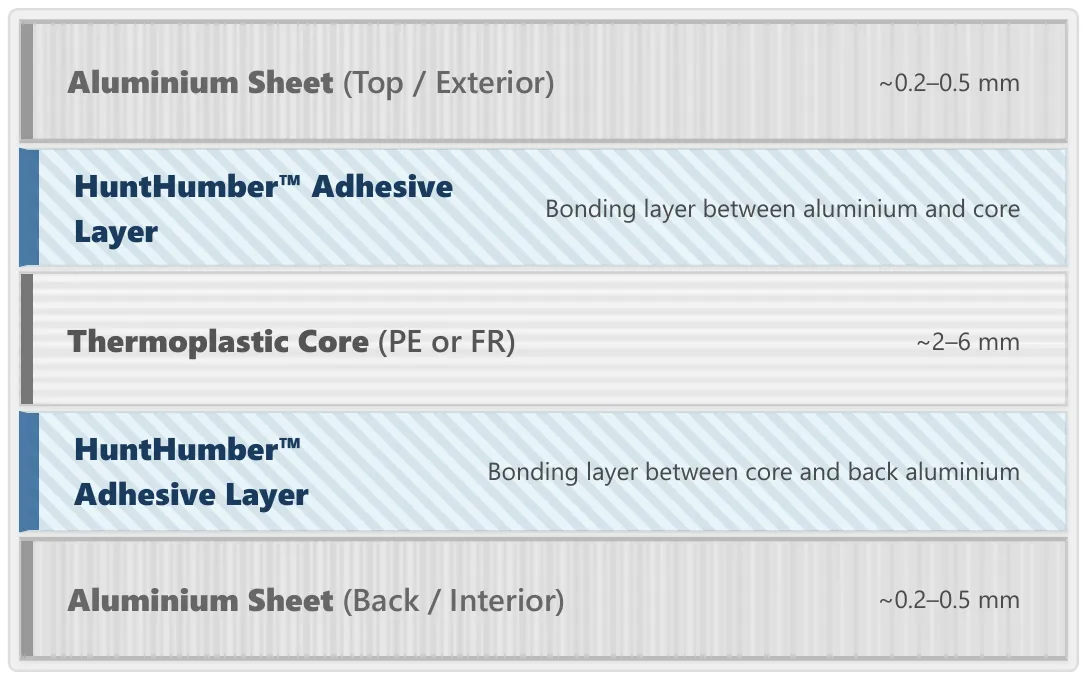
Cross-Section Architecture
Aluminum composite panels combine two thin aluminum skins with a polyethylene or mineral-filled flame-retardant core. HuntHumber adhesive resins can be extruded as freestanding mono- or multilayer films, or co-extruded directly with the core on continuous lamination lines.
PE-CORE ACP · INTERIOR & EXTERIOR
Engineered for conventional polyethylene-core aluminum composite panels, balancing low-temperature wetting, high line speed, and long-term outdoor peel retention.
FR & MINERAL-FILLED · B1 / A2 DESIGNS
Formulated for mineral-filled and high ATH/MDH flame-retardant cores, maintaining interfacial integrity under thermal and fire-testing conditions.
Final fire classification depends on the complete panel and system design.
CO-DEVELOPMENT PROGRAMS
Tailored to specific core recipes, coil coatings, and line configurations, supported by laboratory verification and pilot lamination trials.
Exterior cladding, curtain walls, and folded cassette panels
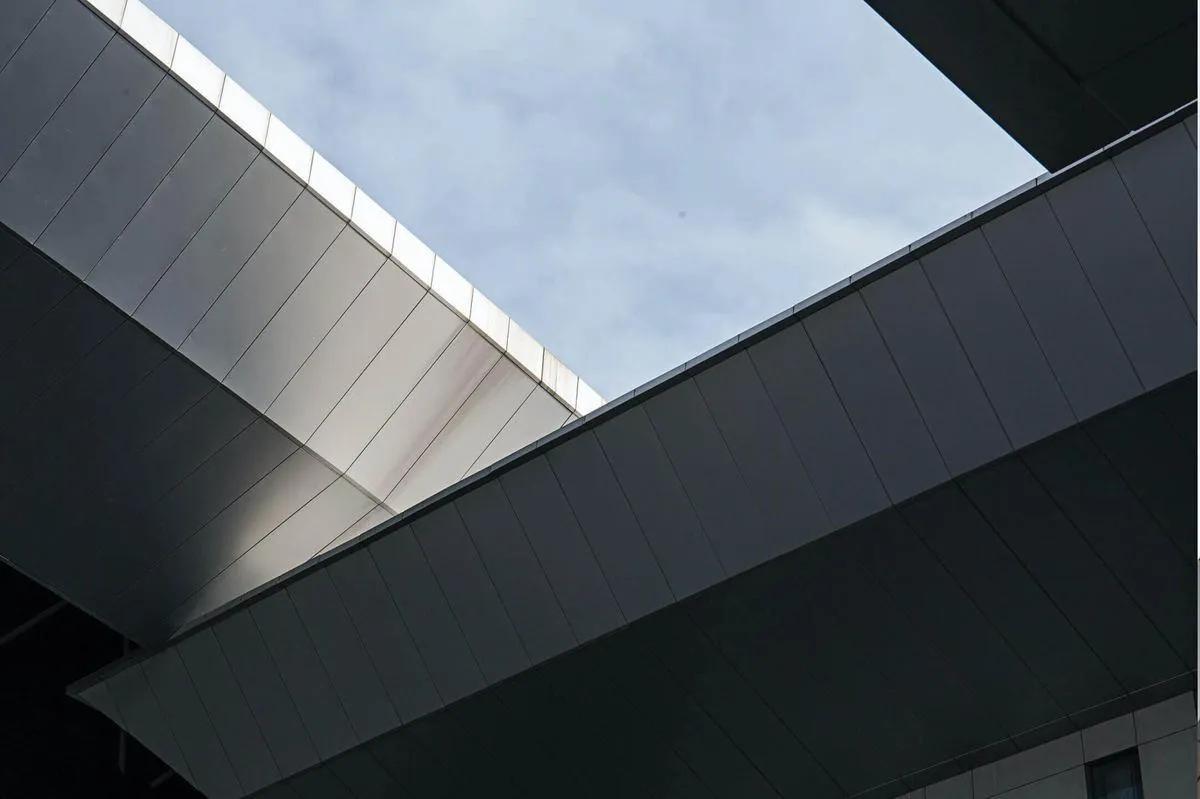
Interior wall panels, suspended ceilings, and partition systems
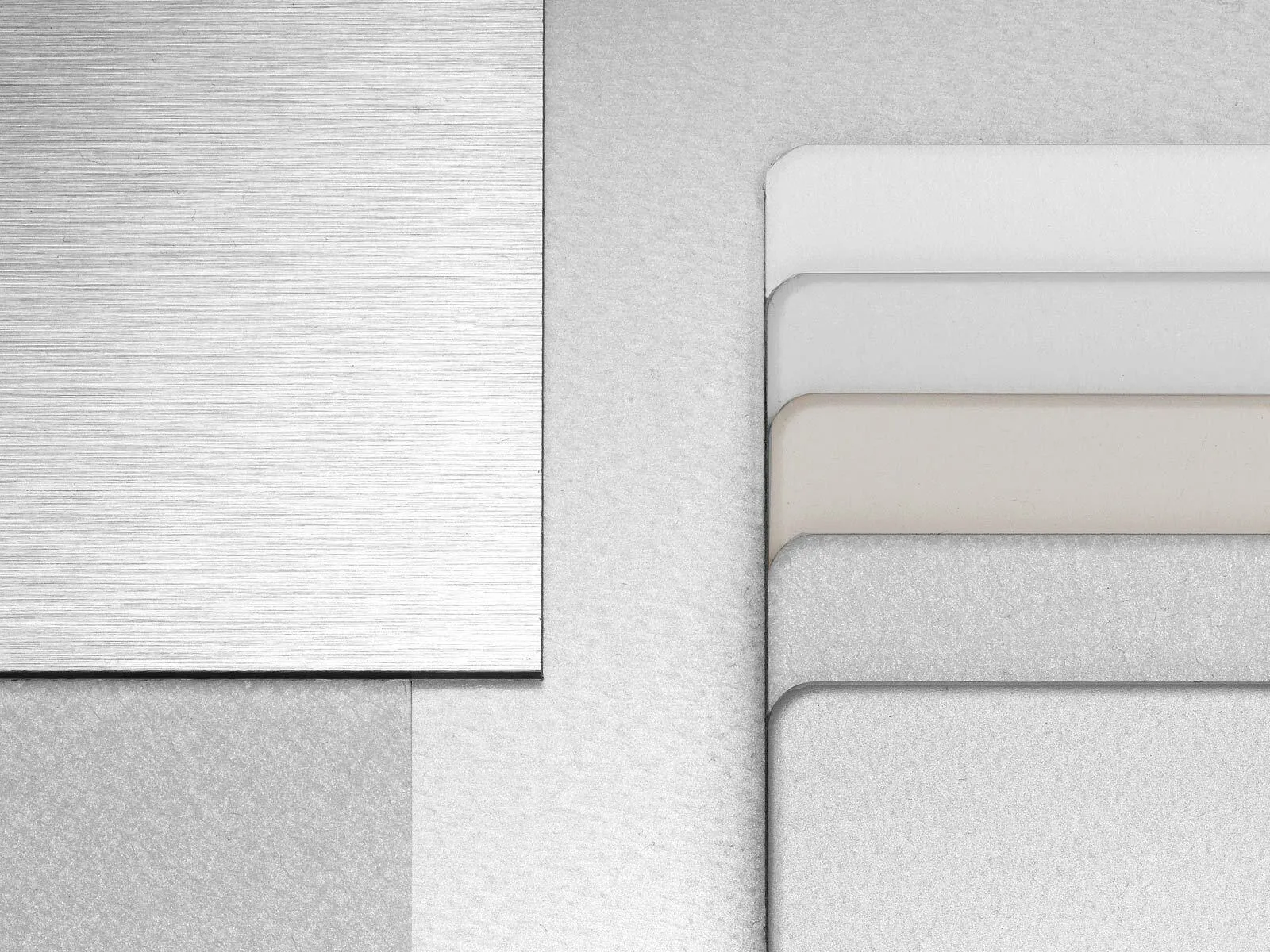
Low-VOC laminates for interior cabinetry and decorative surfaces
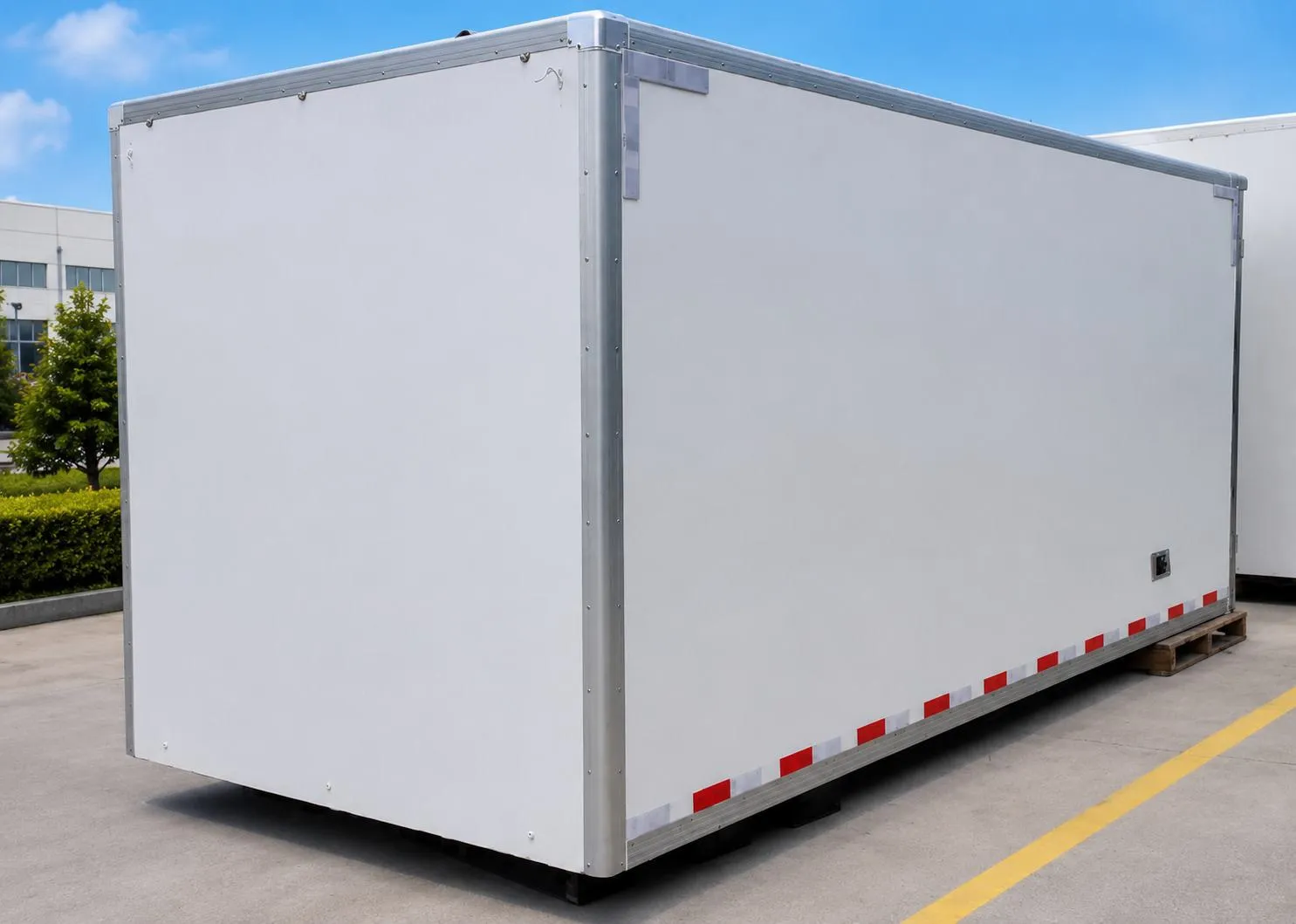
Commercial truck bodies, signage, and industrial composite panels
| Grade | Base Resin | Density | MFR | Melting Point | Vicat / Tg | MAH Content | Bonds To / Targets | Processing / Use |
|---|---|---|---|---|---|---|---|---|
| JME30A | EVA | 0.938 | 3.0 | 96 °C | 72 | Low | Al, SS, PE, Wood | Blown film / Coex coating |
| JMV300 | LLDPE | 0.930 | 2.8 | 125 °C | 101 | Low | Al, PE | Blown film / Coex coating |
| JME30C | EVA | 0.935 | 3.0 | 98 °C | 76 | Low | Al, SS, PE, Wood | Blown film / Coex coating |
| JMV240 | EVA | 0.935 | 2.4 | 102 °C | 82 | Low | Al, GS, Wood, PE | Blown film / Coex coating |
| LHT808 | EVA | 0.928 | 2.3 | 96 °C | 72 | Low | Al | Blown film |
| JMV400 | LLDPE | 0.930 | 4.1 | 125 °C | 100 | Low | Al, GS, PE | Blown film / Coex coating |
| JMV260 | LDPE | 0.935 | 2.8 | 105 °C | 88 | Low | Al, GS, PE | Blown film |
| JMV265 | LDPE | 0.930 | 2.3 | 115 °C | 92 | Low | Al, GS, PE | Blown film |